-------------------
highlighted work
-------------------

Gears of War (blockout)

-------------------

There's Nothing Undergound
-------------------

Goozilla

-------------------
additional level design work

Game Over (for Johan)

The Last Blue

-------------------

Statue Returning Home

-------------------

The Citizen
-------------------
The Citizen
-------------------
| Team Size | Duration | Engine |
|---|---|---|
| 2p | 4 weeks/halftime | Unity |
-------------------

The Citizen is a first person narrative comedy game (absurdist narrator-fetish) about “how to deal with important subjects without saying anything”.
-------------------
| Team | Contribution |
|---|---|
| Yigit Doruk | producer, gameplay design, programming |
| Edvard | level design, narrative design, audio design |
-------------------
Design process
One of the first games I worked on. My goal was to learn effective ways to combine level design with narrative audio.
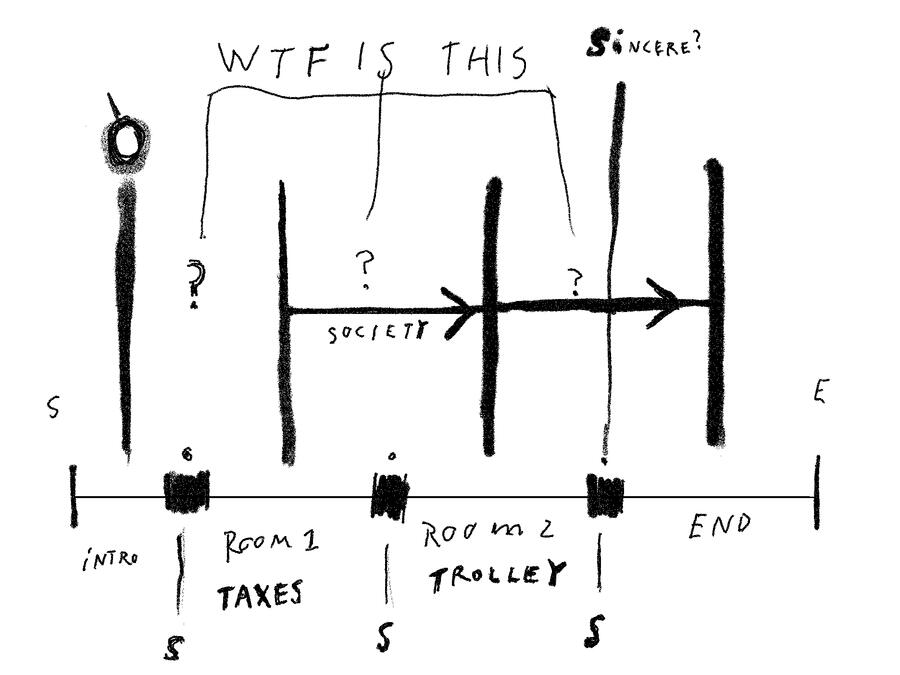
Level design goals
Keep the player guessing:
the level should be easy to navigate but reveal the level bit by bitReward exploration:
if the player takes time to deviate from the main path, have something there to acknowledge their achievementAlleviate intake of narrative audio:
if narrative audio is playing the player should have somewhere to go or something to do
------------------
Design spotlight - intro
How we tried to suggest to the player how to play the game and create expectations for the rest of the game.
------------------
click to enlarge

original topdown

click to enlarge

final level

------------------
suggestion & expectations
-------------------
The value proposition of this game is comedy and amusement. The first thing you do is waking up as a voice calls out for you to "find who you really are". The bedroom is rotated and the lighting outside is arranged to look like a ceiling lamp shines into the room. Strong red light was used to catch the players attention and lure them into the "baby altar room".

WAKE UP AND FIND THE BABY


MOVE THROUGH CORRIDOR, EXPLORE POINTS OF INTEREST
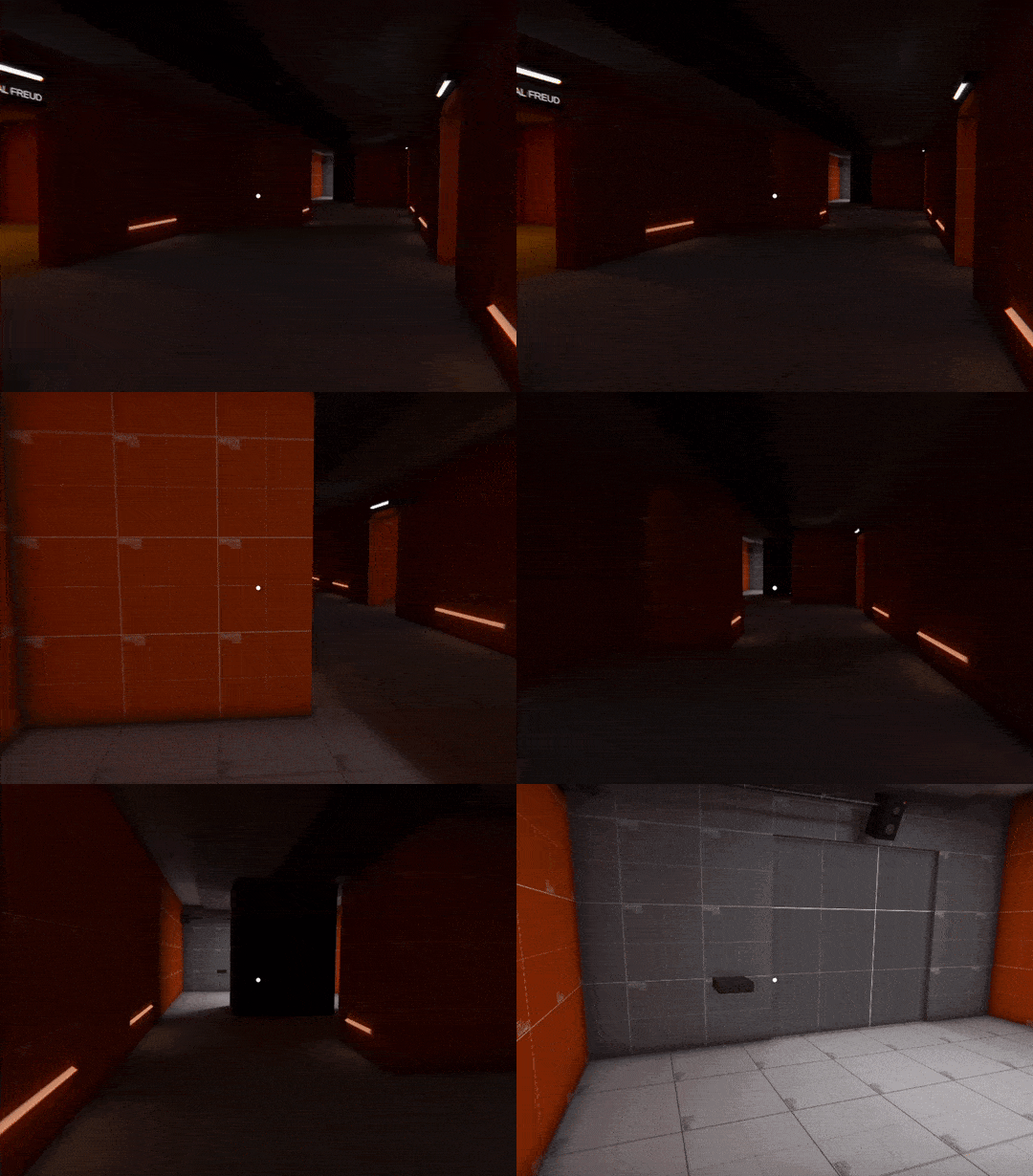
I wanted the player to start exploring early, and to question what was going on in the game. The corridor was designed to lead the player forward but bait them into the rooms along the path.
When the player enters the lobby they are confronted with a slightly jarring hip hop performance and while they are asked to navigate these railings the exploration elements is pushed a little bit further by introducing a gap in the wall.
TEACHING JUMP & GUIDE PLAYER TO THE GAP IN WALL
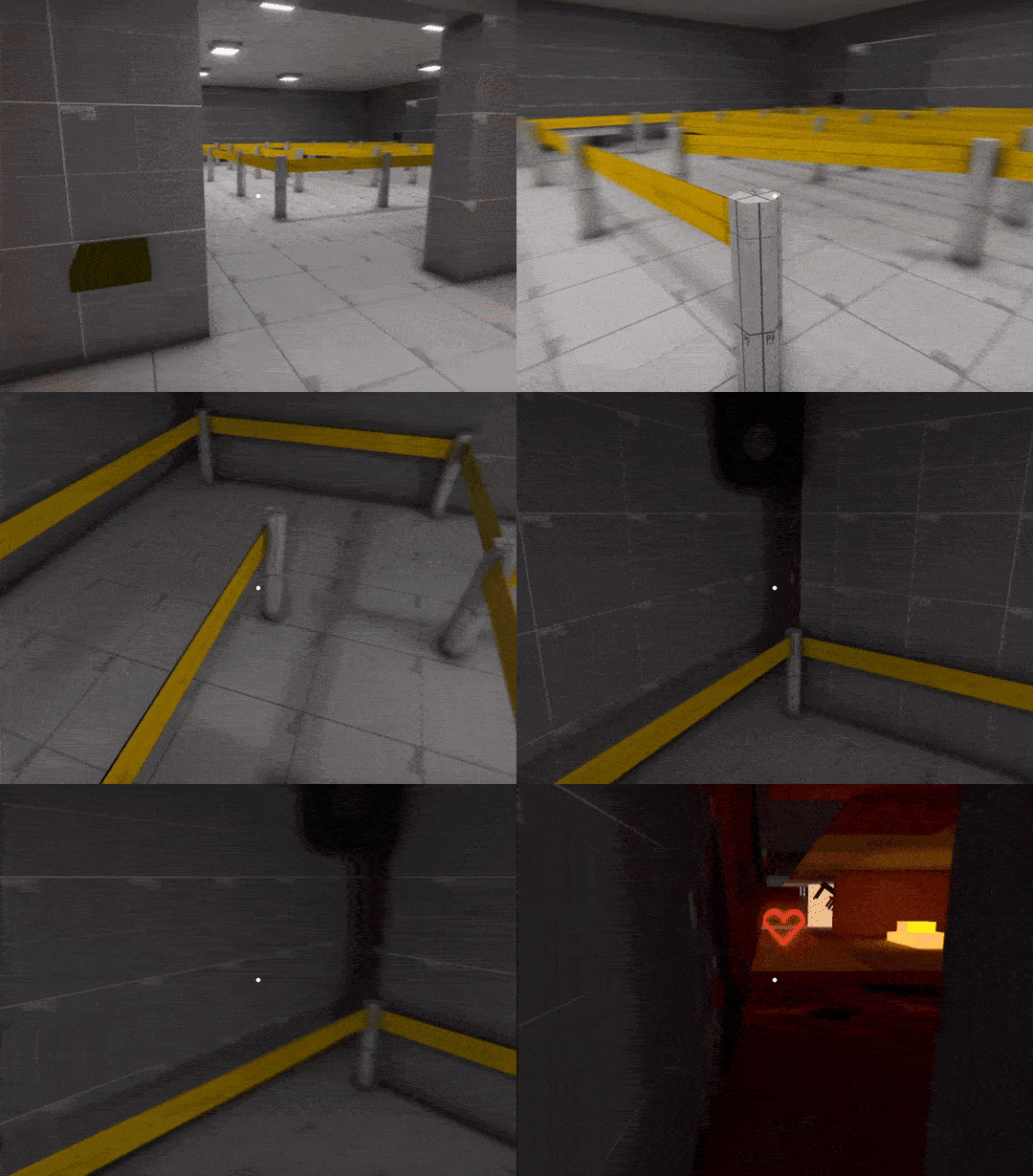
excerpt from playtest
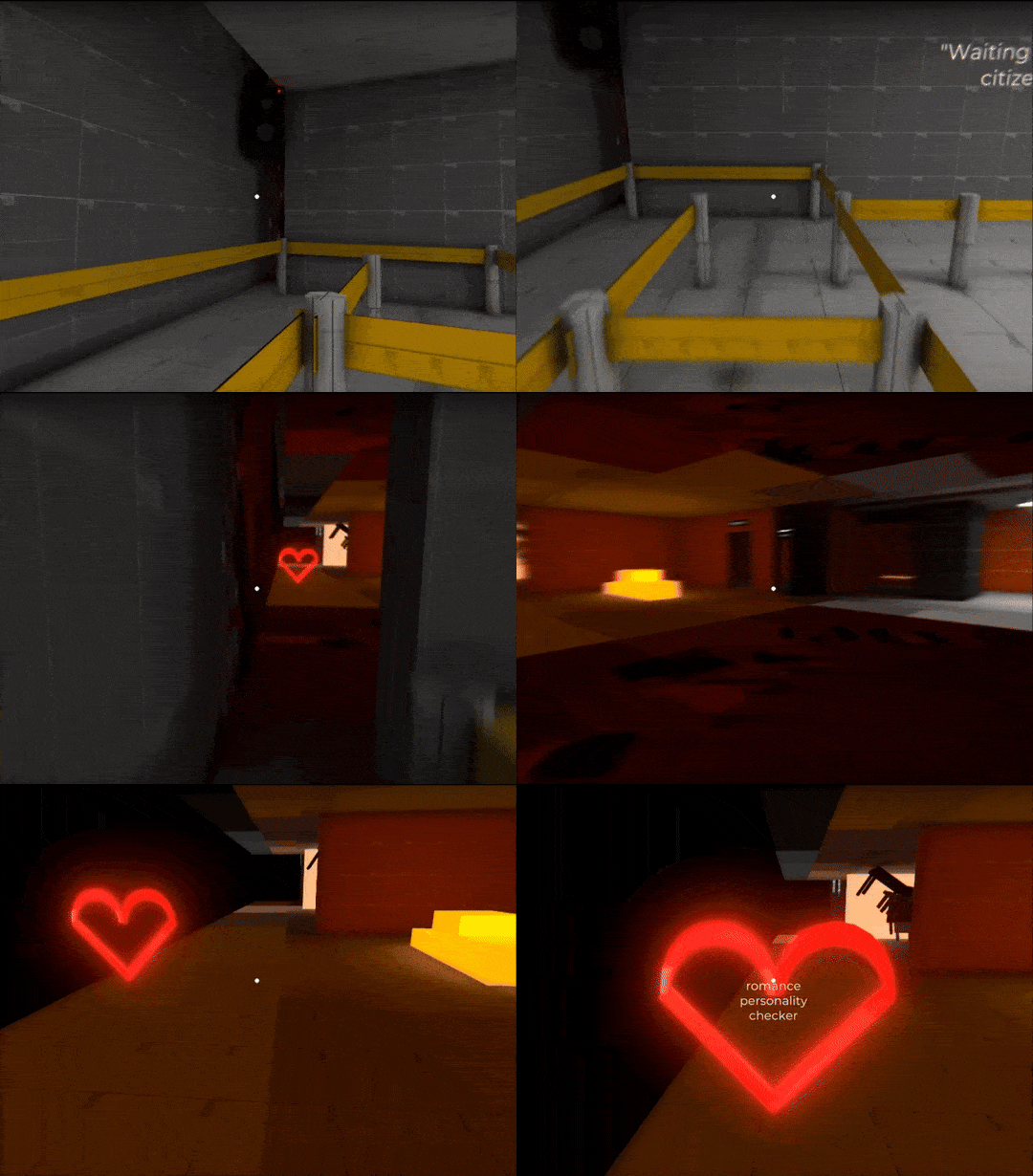
I wanted to build up enough "rebellion" in the player for this moment, and simultaneously use this moment to build up expectations for the rest of the game where the player might think that "Oh maybe I can escape the level again and finally understand something about what is going on".
-------------------
love
I love this game,
it represents a shadow version of myself that can rob anything of its meaningful potential and turn it into a creative bomb of lunacy
-------------------
After some initial playtests a problem with the "lobby room" became clear.
Players would enter this rather large and empty room, a long audio sequence played out and while some enjoyed listening most would stop controlling the character and just stare at a wall.

Finally, by shifting a wallpiece in the lobby I created a gap in one of the corners.
The gap was wide enough to walk through and led to an empty space where you could see the intro corridor from the outside.
I also added a glowing heart in the space that would be visible from the entrance (the gap).

I already wanted to cut down the lenght of the audio clip, but that would only make the problem less bad, but not fix it.
We decided to add these "waiting-line-in-airport"-railings that the player could jump up, on and over.
The railings seemed to fit the theme "citizen" and we thought many players might recognize the experience of being the only one in line and having to walk forever in this snake-like pattern to reach the counter.

The playtest of the updated level seemed to have a lot more activity and engagement in this room.
And so, we declared the problem with the lobby fixed.
excerpt from playtest (16yr, finalnd)
After some playtesting it seemed like players was likely to find the gap in the wall.
In conclusion the addition of the airport-style walking path and the gap in the wall seemed to keep players engaged during the lenght of the abbrieviated narrative introduction.
GAME OVER (for Johan)
-------------------
| Team Size | Duration | Engine |
|---|---|---|
| Solo | 3 weeks | Unreal |
-------------------


-------------------
Design process
In this project I wanted to explore how players would navigate a level using text elements in various ways. It would probably benefit from more interactivity and gameplay elements, but as a design process I think it is showcasing my experience with creative projects where the timeframe demands striking a balance between planning and execution.
-------------------
Level Design Document

Synopsis

Progression

Topdown

References


-------------------
Blocking it Out

scale test

first blockout

first iteration

second iteration

Final blockout


-------------------
-------------------
a mock blockout for gears of war
-------------------
| Team Size | Duration | Engine |
|---|---|---|
| Solo | 4 weeks | Unreal |
-------------------

click to see playthrough video

-------------------
Gears of War is a 2006 third-person shooter developed by Epic Games.
-------------------
introduction
In this project I wanted to explore level design for combat encounters. The design also focused on strong co-op potential.The blockout was made as part of a 4 week course led by industry veteran Peter Vesti Frendrup.
-------------------
The implementation in Unreal is using a modified version of AGLS by JakubW.
-------------------

Top-down view. A wide road in the city leads the players up onto a bridge.

Section under bridge

The first combat encounter.

Initial position entering the first combat encounter.

left flank - first encounter

left flank - first encounter

right flank - first encounter - note the doorway and windows on the far right side and how players in co-op will be able to see each other across the space.


-------------------
Design process
-------------------
Our first task was to choose a game and then research and analyze what we needed for our paper designs.I chose Gears of War. I had fond memories from it's release on Xbox 360 as I recalled the cover based combat worked really well in their levels. It also seemed really interesting to revisit the game from the perspective of a level designer.
-------------------

The process we followed during the course.

-------------------
research

The key elements to consider for a level designer that I could identify during my research of the game.

-------------------
Paper Design
The following slides are abbrieviated excerpts from the paper design.
-------------------
After presenting our research, Peter provided a brief with goals for the level.
-------------------

-------------------
Additionally, I decided that the level would sit between two levels from the original game (“Trial By Fire” and “Fish In A Barrel”). The reason for this was to get closer to designing a level for the context of this game and to have some "knots" that could tie into the game’s existing chapters.
-------------------

-------------------
My next step was to try and break down the goals into some initial guidelines for a high level structure of the level.
-------------------

Breakdown of goals

-------------------
Going through different types of environments to consider for this level I decided to focus on a wide road section as the main structure for the level.
-------------------

Based on the initial guidelines I reasoned that a wide road section could provide an open, dynamic space with multiple optional strategic possibilities for the players to utilize.I then focused on contrasting three very high level concepts with each other.
-------------------

I decided to go with the third option.In summary this layout seemed like the most flexible and exciting one to use for a blockout.The dynamic elements with verticality and moving in under and around a bridge creates potential for contrasting the space's and make them more defined/readable.This flexibility in tailoring the visible space ahead provides potential for creating expectations and unknowns for the players when pushing through the initial sections.Finally, utilizing a narrow road, the bridge can facilitate intense close-quarters combat as a climax before the finish line.
-------------------


These illustrations represent the main paths the players could take in the first draft of my blockout. The iterations I have made does not really deviate from these but I have expanded and added more nuances compared to these high level representations.
-------------------
Blocking it Out
-------------------

scaletest - topdown

scaletest - alt. angle


-------------------
establishing a baseline
After making a rough scaletest, I decided to focus on refining the first combat encounter to establish a sort of baseline for what I wanted to achieve. I also saw a risk of ending up with three half-baked encounters with the limited timeframe in mind.This approach allowed me to build a stronger understanding of how to design these spaces before I began designing the later encounters in earnest.
-------------------

First iteration of the initial part of the level and the first combat encounter.

Second iteration - removed a lot of cover and added a new flanking option to the right (the green box).

Third iteration - lifted the right flanking option and expanded a bit on the left interior side path with opportunities for weatherproofed shoot-outs.


-------------------
playthrough video
-------------------
the last blue
-------------------
| Team Size | Duration | Engine |
|---|---|---|
| 16p | 7 weeks | Unreal |
-------------------
-------------------
In The Last Blue you play as a young girl who finds herself lost within an ancient shrine. She realizes that to escape this shrine, she will have to learn the language that seems to be scribbled on the walls and start understanding what it means.
-------------------
| Contribution |
|---|
| Level Designer |
-------------------
flycam level sequence
--------------------
design process
--------------------
fleshing out the game world
--------------------
My initial notes about the levels:
0 - "Intro level"
Above ground
Onboarding
First puzzle: Opens door to the first level "Energy chamber"
Should include enough information for the player to learn the basics of the core mechanics.1 - "Energy chamber"
Where the shrine children were kept isolated.
Player meets the shrine ghost here.
Possibly the player and the ghost play hide and seek here and the player might learn words in the process.
Might have toys that were made by the children being kept there.2 - "Devotional Grounds"
Where Monks do rituals and chill
Nature focused visuals, roots coming down, plants possibly trees.3 - "Tech Chambers"
Engineering complex - more high tech
Holds the key answers for the unfolding of the main conflict in the narrative. Something around how the machinery functions will give this information.

Levels overview


Sketching out the levels into a unified world.

--------------------

The diamond structure that would house the three main levels.

Intro - topdown

Some iterations of the intro part leading into the temple.

Intro blockout almost done

Scale test - level 1

Level 1 - topdown


--------------------
second level
--------------------

topdown

--------------------

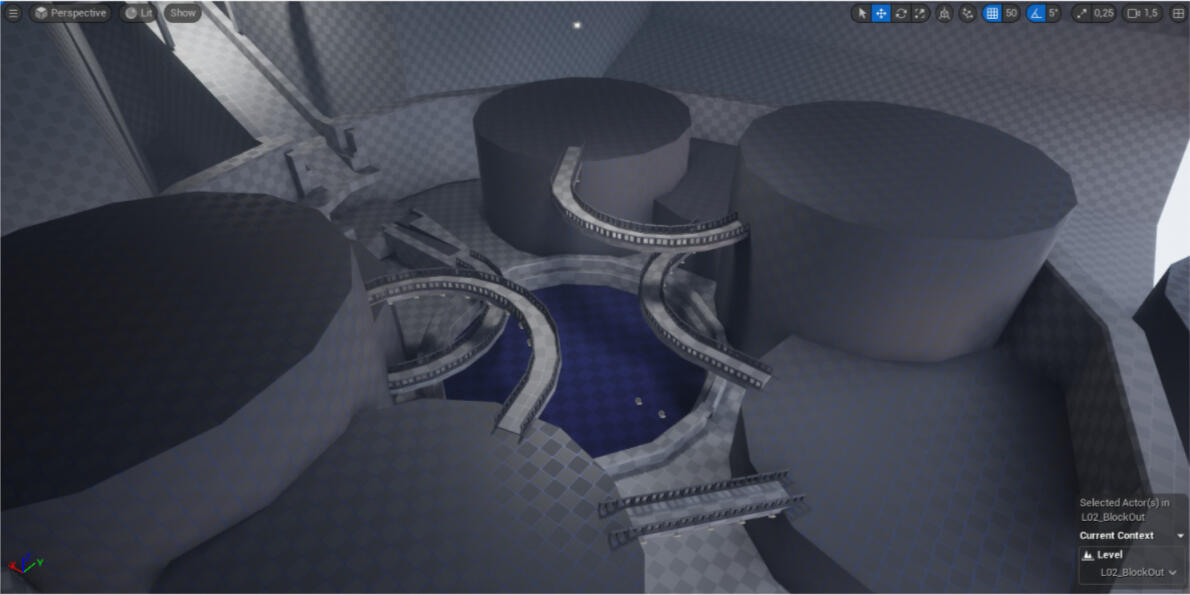
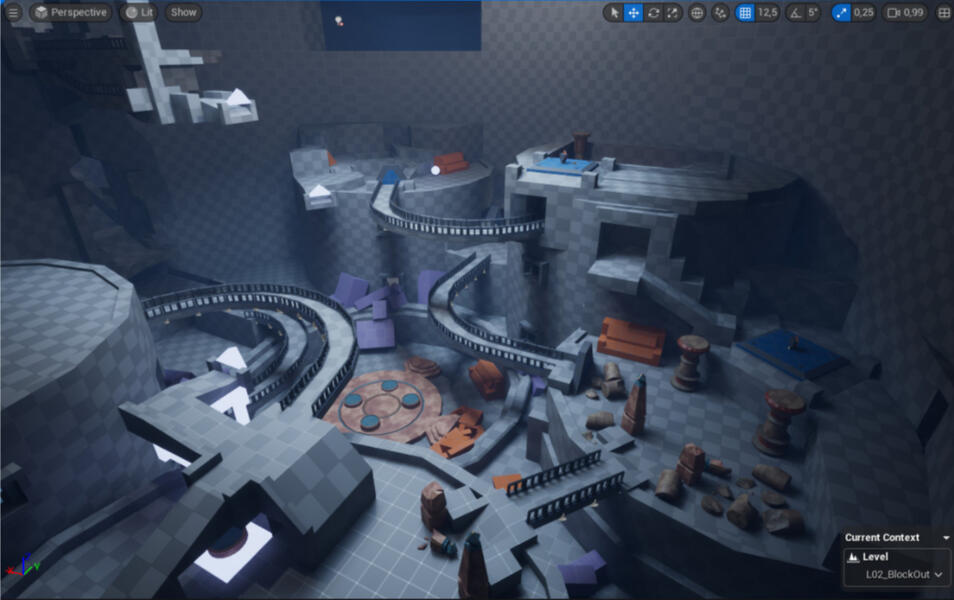
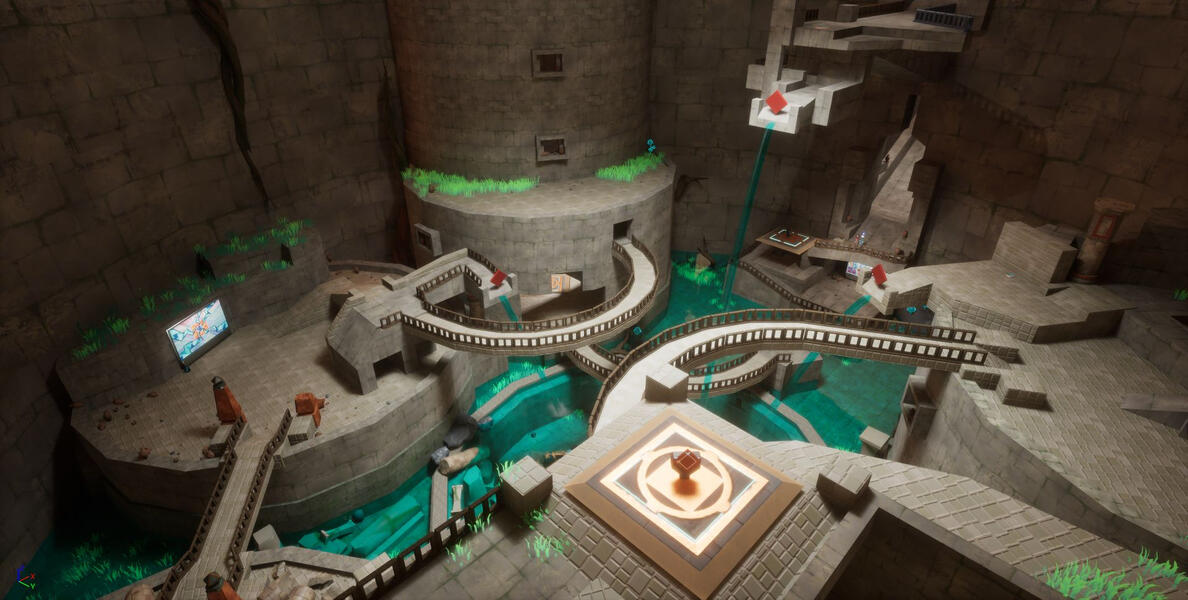
Blockout in progress

Final blockout

Final Level
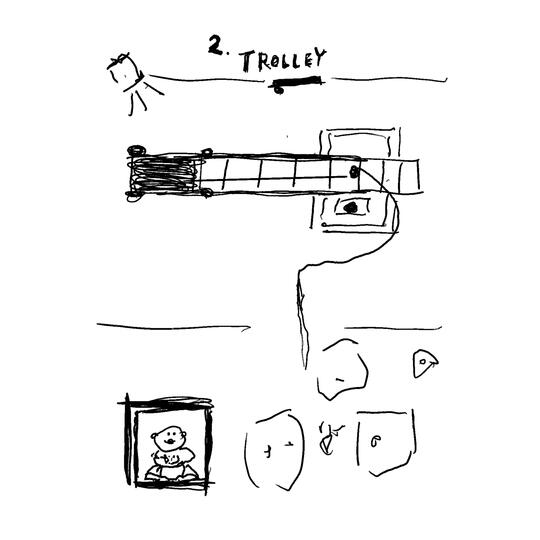
-------------------
There's Nothing Underground
-------------------
| Team Size | Duration | Engine |
|---|---|---|
| 6p | 8 months | Godot |
-------------------
-------------------
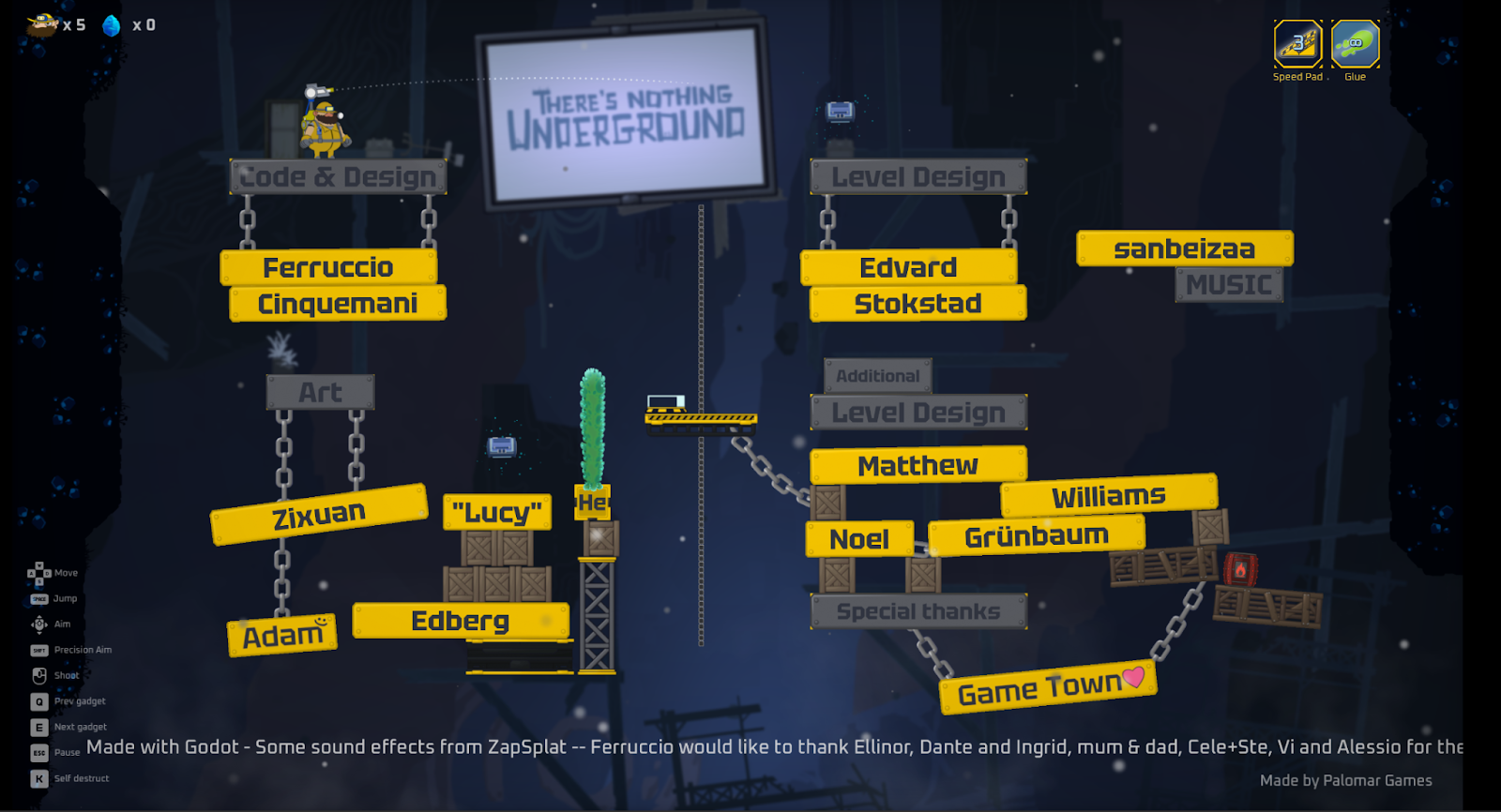
There's Nothing Underground
is a roguelike puzzle adventure where you use random tools to solve levels in endless ways. Unlock and combine tools to tackle 100+ levels, each with unique challenges. Find creative solutions, uncover the asteroid's secrets, and survive!
-------------------
| Studio | Contribution |
|---|---|
| Palomar Games | Level Designer |
-------------------
Introduction
Design process
Initial work focused on creating new levels and during this phase new level elements and gadgets would get added to the game, which gave me some direction in terms of making sure we had levels utilizing these new elements. It was also a period where I was part of a lot of discussions about the gameplay design, level design and what directions, improvements etc. would lead to the best potential for new levels, current levels, consistency etc.This phase actually began during my graduation project. Where I had created a spreadsheet for all the levels and conducted quite a bit of playtesting sessions that were recorded and shared with the team.After some time we got invested in a visual overhaul of the game, which lead to me doing set dressing of all current levels. This also further lead to me spending time in all current levels doing minor fixes or full level passes, to improve consistency or updating the levels to accommodate something new or something that changed in the project. To me this felt like my role was growing into a proper “main level designer” because I was basically keeping track of all the levels in the game and made sure they worked as intended. During this time I got a lot better at rationalizing, communicating and condensing the reasons for why I decided something or argued for or against something. I also edited a trailer for the game during this phase.After the summer I was initially working on the onboarding and accessibility of the game. I made a failed attempt at an easy run after the tutorial that ended up with me reworking the tutorial instead, baking it together with the easy run so that it felt less like a tutorial and more like a guided start of the game.Next up we reworked how runs and progression worked. We reworked how gadgets were acquired and translated that into all the levels while also adjusting a lot of things for that. My focus was shifting toward playtesting the game more and more here. I playtested with almost half the people at the office and others, and used the feedback and impressions to improve levels but mostly general balancing of difficulty not inside levels but in collections of levels that we used for the different runs.During the last two months of the LiA period my work shifted into more focus towards finalizing the game, where polishing, playtesting, making small collections of specialized levels like extra hard levels, “final levels” that come at the end of each run, etc. I had external playtesters play through the full game so that I could balance and tweak the later parts of the game better, this also ended up being a great way of finding and tracking bugs because many new different “systems” (one/two monitors with/out controllers for example) were running the game. Using a bug tracker, I was reporting and then in some cases fixing and figuring out what caused the issues etc. I also recorded a lot of gameplay footage and made a release trailer. I learnt a lot of what it takes to finalize a game here, and how a lot of small things you fix can eventually combine and give big perceivable differences.
-Playtesting
-Data sheet
-Trailer
-Set dressing
-Balancing & runs
-Iterating and improving existing levels
Level Data Sheet

Level data sheet - one of the first things I did in this project was to create a data sheet for the levels in the game. This proved to be extremely useful and an essential tool later on when balancing the game.

Anoter benefit from havíng all levels in a data sheet was that I could visualize information to help make decisions on the overall direction of the levels.


Levels/Examples
--------------------
There's Nothing Underground
-------------------
| Team Size | Duration | Engine |
|---|---|---|
| 6p | 8 months | Godot |
-------------------
-------------------
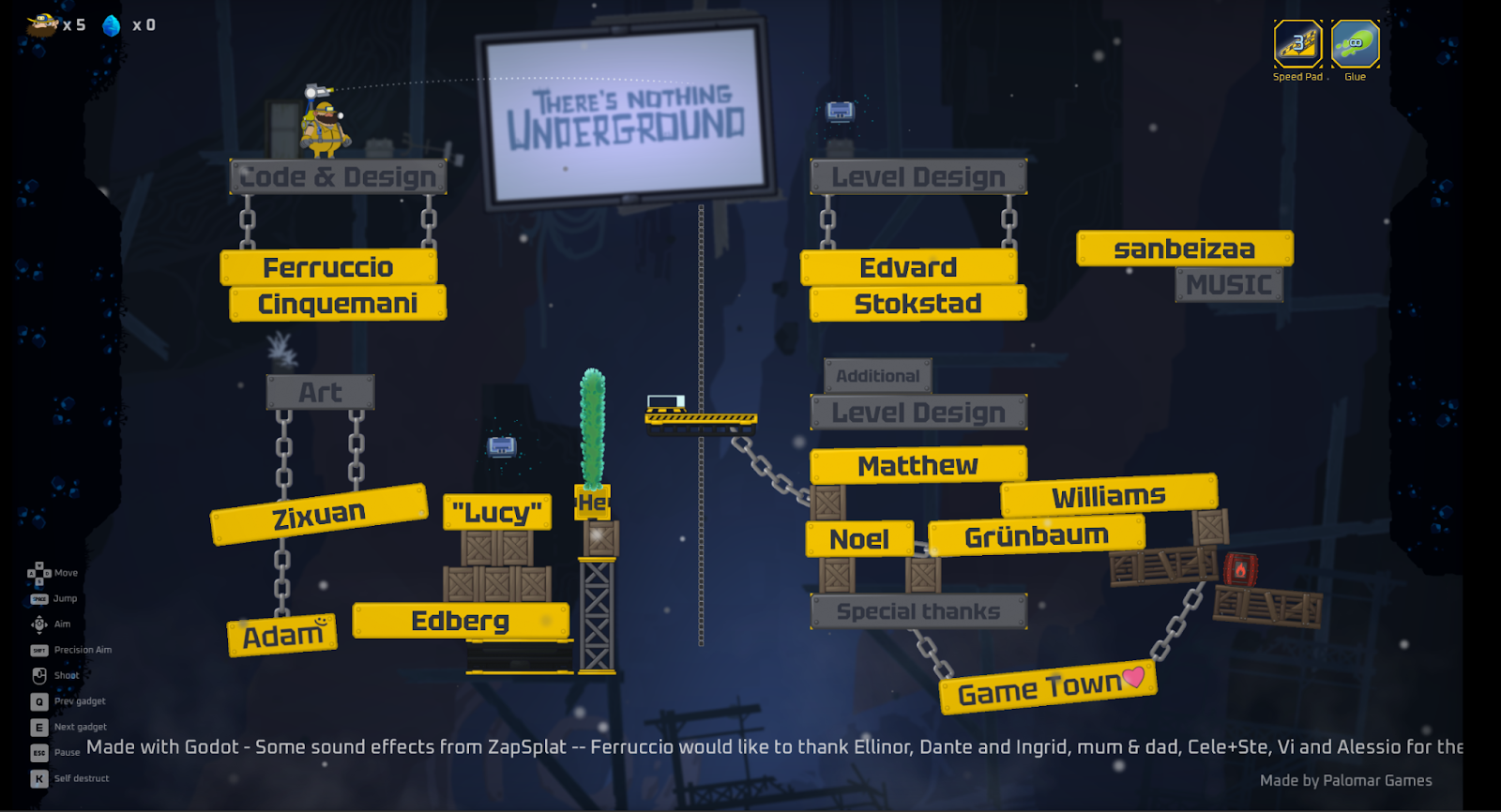
There's Nothing Underground
is a roguelike puzzle adventure where you use random tools to solve levels in endless ways. Unlock and combine tools to tackle 100+ levels, each with unique challenges. Find creative solutions, uncover the asteroid's secrets, and survive!
-------------------
| Studio | Contribution |
|---|---|
| Palomar Games | Level Designer |
-------------------
Design process
I worked on this project for about 8 months in total.The last 6 months of those was part of my LiA period as a student at Futuregames.
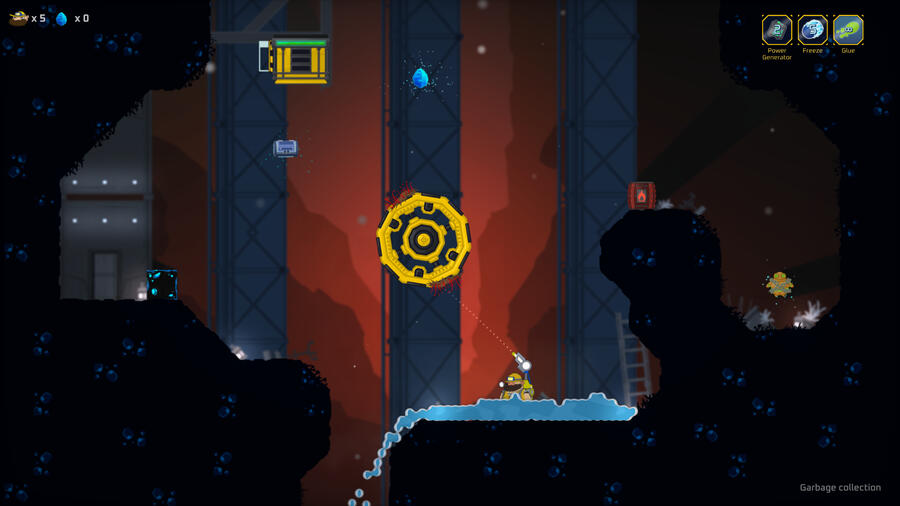
Informal gameplay/level design pillars
One problem, many solutions:
there should not be ONE intended solution for a situation. There can be gadgets that make it easier to solve a level but the designer should always test with many different gadgets.Broad strokes:
no solution or gameplay should be based on pixel perfect precision. If a placement is very interesting but requires too much precision, it needs to be reworked.Mind over athletics:
this game is puzzle first and action second. If a solution requires intense platforming, it needs to be reworked. The player can move and jump but moving and jumping is not the focus; gadgets and creative solutions are.
-------------------
Level Data Sheet
One of the first things I did in this project was to create a data sheet for the levels in the game. This proved to be extremely useful and an essential tool later on when balancing the game.
Anoter benefit from havíng all levels in a data sheet was that I could visualize information to help make decisions on the overall direction of the levels.


--------------------
Levels I made
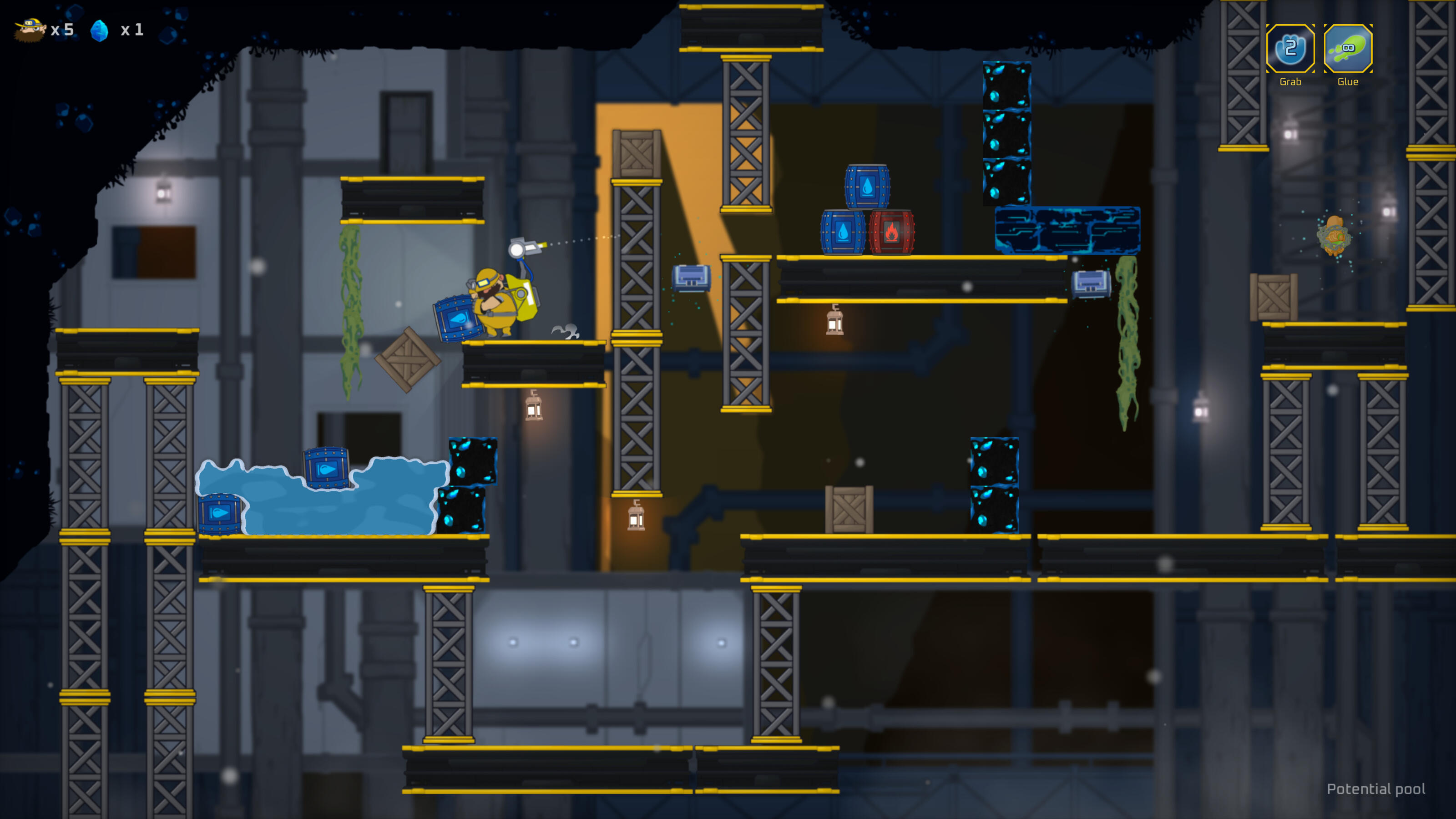
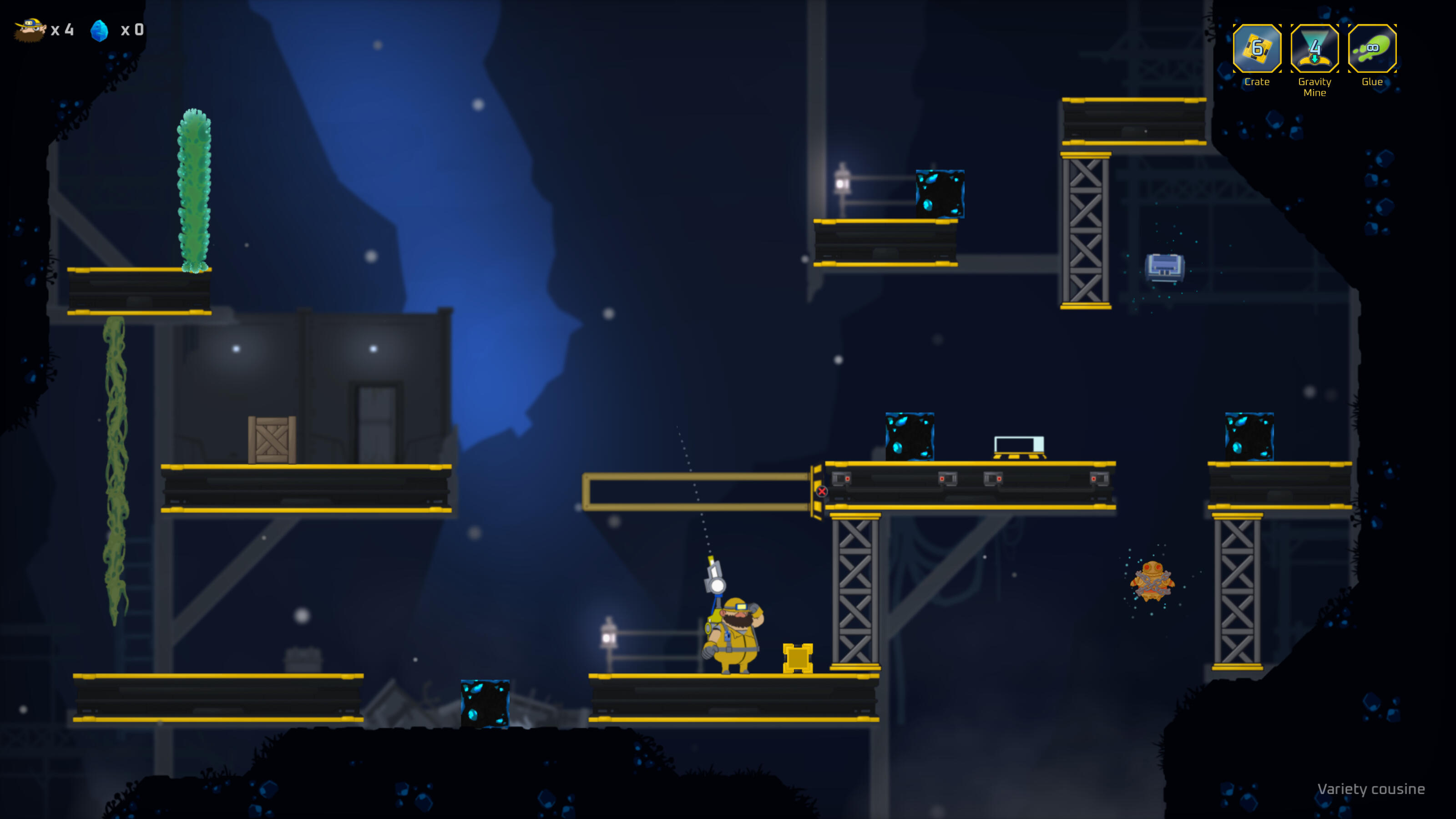
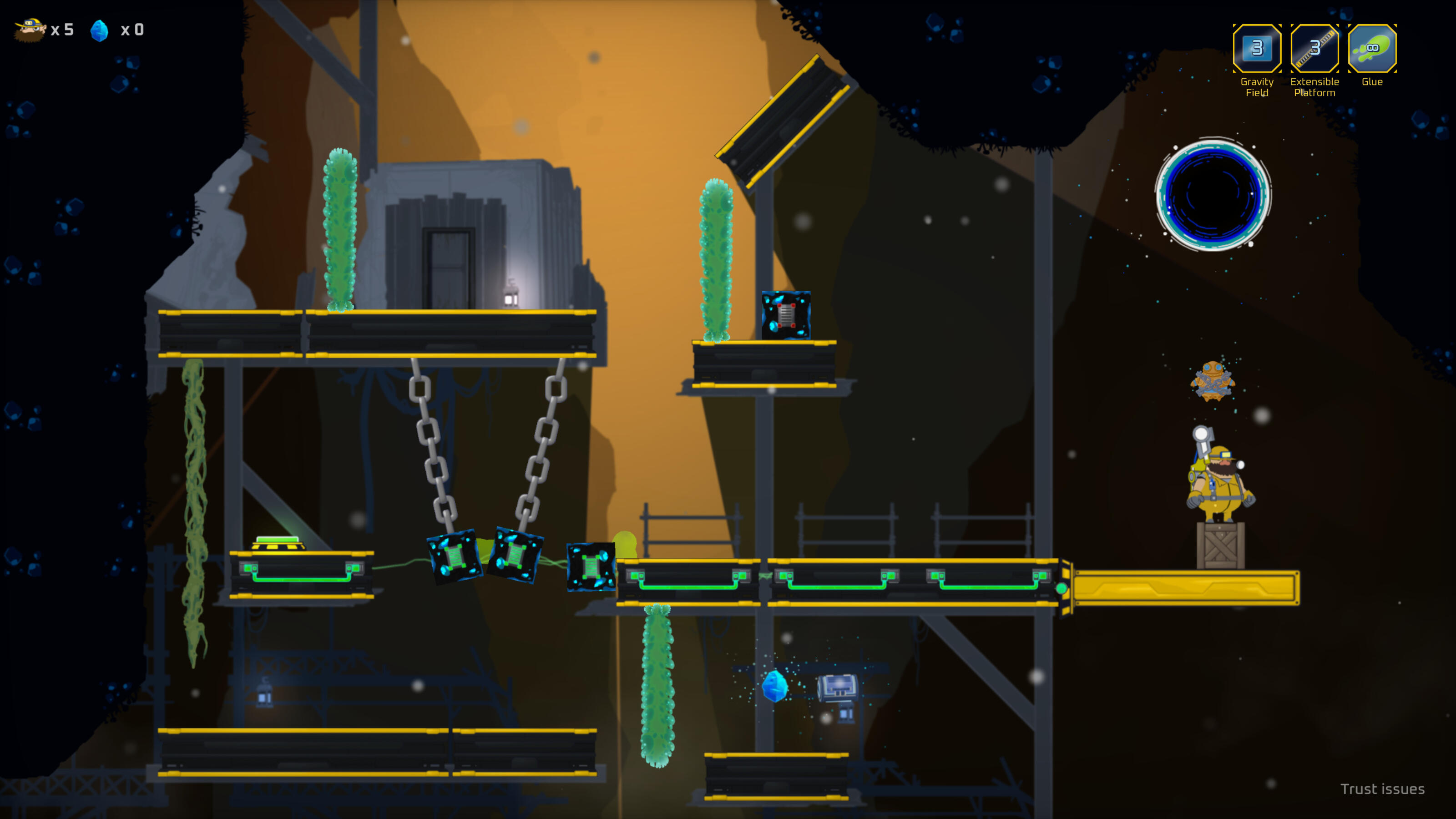
I made over 50 levels for this game, here's a few:

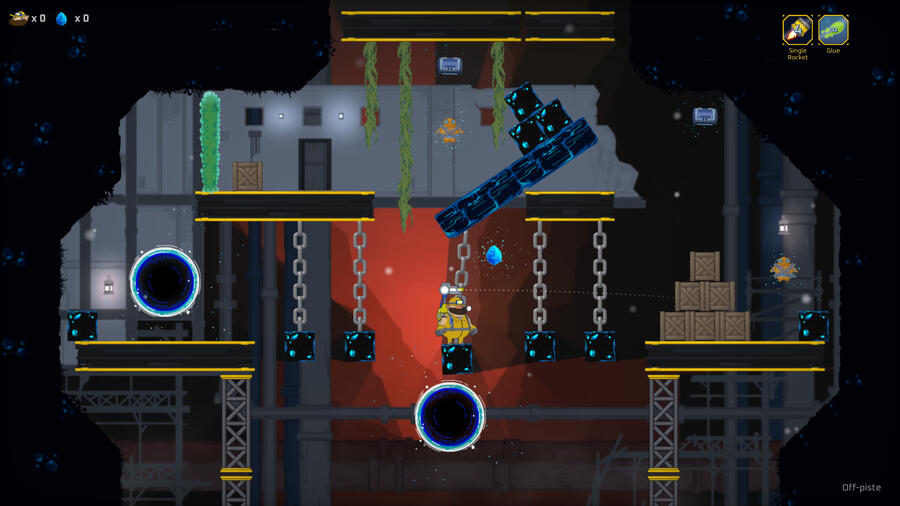
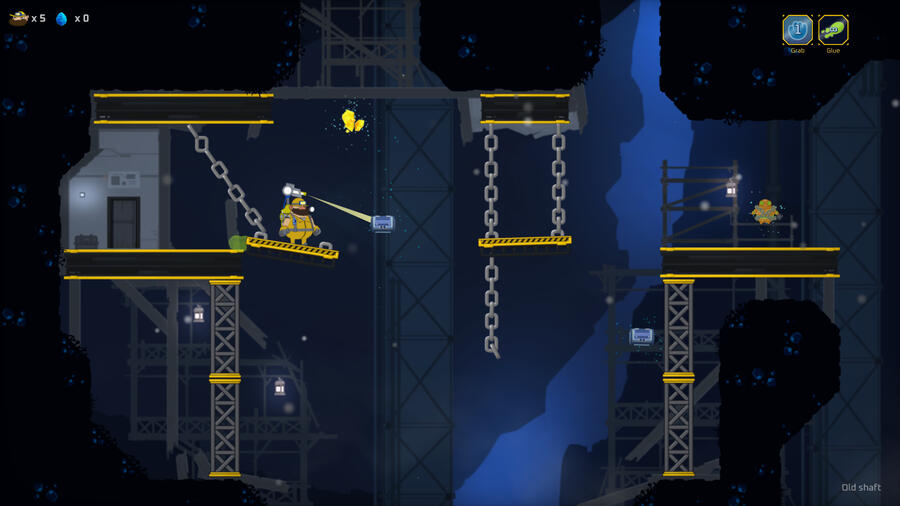
"Potential pool" - Level based on breaking water barrels to fill up a pool that allows the player to progress

"Variety cousine" - This level is a good example of suggesting many solutions for the same problem. In order to get to the right side you can use gadgets to either make a big jump sideways, a high jump from underneath, or try to push the button.

"Trust issues" - In this level I wanted to create a challenge that requires players to comfortable with their own "construction". If the electrical boxes moves too much and loose their connection with eachother, the bridge will retract.
-------------------
GooZilla
-------------------
| Team Size | Duration | Engine |
|---|---|---|
| 8p | 4 weeks | Unreal |
-------------------
-------------------
Eat. Grow. Destroy!Goozilla is a pick-up-and-play rogue-like with chaos and destruction front and center!
Destroy the city and bring an end to humanity as an all-consuming and ever-expanding blob of slime!
Feed on buildings, vehicles, and whatever else you find to grow and unlock new abilities and upgrades. Fight off the military as humanity tries to stop you!
-------------------
| Contribution |
|---|
| Level Designer |
-------------------
design process
-------------------
This was a difficult process for me and because of that also valuable in so many ways. In summary I had to make an open level that should feel like a city, where the player would grow in size and eat everything. Because we would not have any artists I also needed to find a way to build this using external assets. In the end I feel happy about how I managed to navigate this process.
In the following screenshots I share a selection of areas and some design considerations I had for them.
-------------------

Initial workflow during prototyping

-------------------

Onboarding area - getting the player familiar with movement and consuming objects that are small enough.

Onboarding area - the player can take their time here. Enemies are placed around the area but wont go after the player before they leave this area.

Next to the start is a more open space - This area gives some empty space to focus on taking out enemies (police cars).

Second area - built around a park - with some more open spaces and less stray cars, the focus here is dealing with the increasing amount of enemies and enemy types.

Turrets are lining up after the park, indicating and deterring from moving to far into the city before the player has grown stronger.

Hospital with some extra enemies posted serves as a landmark and indication that certain sites could have more protection.

Military base sits next to the point where larger buildings appear - intented to work as a point of interest with extra difficulty. When/if the player has destroyed this base they should feel confident about that taking on whatever the game throws at them.


-------------------
design process
-------------------

Level design process

requirements

Onion city

analysis

metrics

layout sketch

Layout sketch

Topdown sketch

Research


-------------------
Goozilla was made by students at Futuregames in Stockholm, Sweden.
| Team | Contribution |
|---|---|
| Jan Björk | Product Owner / Game Designer / Art Director |
| Jakob Ferenius | Scrum Master / Design Lead |
| Edvard Stokstad | Level Designer |
| Lucas Serafin | System Designer |
| Erik Gafvelin | Programming Lead / AI Programming |
| Adrian-Robert Baluta | Gameplay Programming |
| Moa Jansson | Audio Programming |
| Liam Ribaric | System Programming |
-------------------
| External Assets Used | By |
|---|---|
| Lowpoly Style Large Content Pack | CGAssets |
| SimplePoly City - Low Poly Assets | VenCreations |
| Stylized | Turrets | Pack | YadroGames (CC-Attrib) |
-------------------
Other stuff
--------------------
For the curious;
I gathered some;
non-level design-stuff here!
--------------------

Vanhalla III: Enter the Monkey Dome - mobile arcade - design lead

--------------------
Might and Delight - Emma
ArkDes exhibition about game design in sweden.
Cinematography, Editing
--------------------
SLUSSEN
part of a portrait series for
SITUATION STOCKHOLM
Cinematography
--------------------

--------------------
| Contribution |
|---|
| Level Designer |
--------------------

LDD-1

LDD-2

Needs some better screenshots/gameplay videos, sorry!
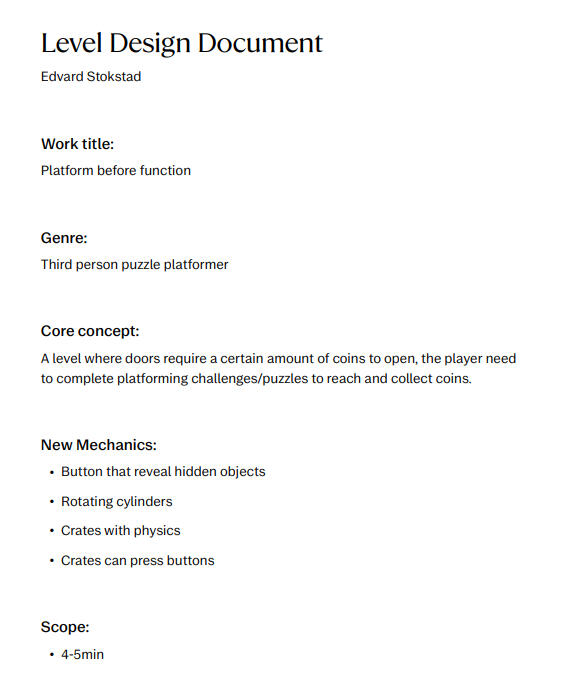
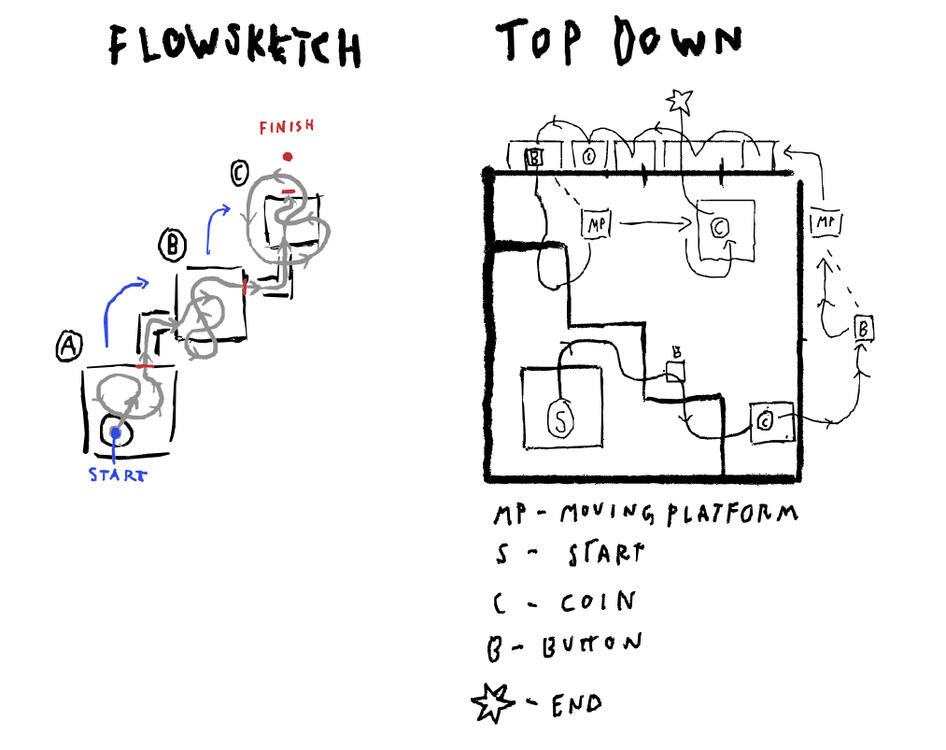
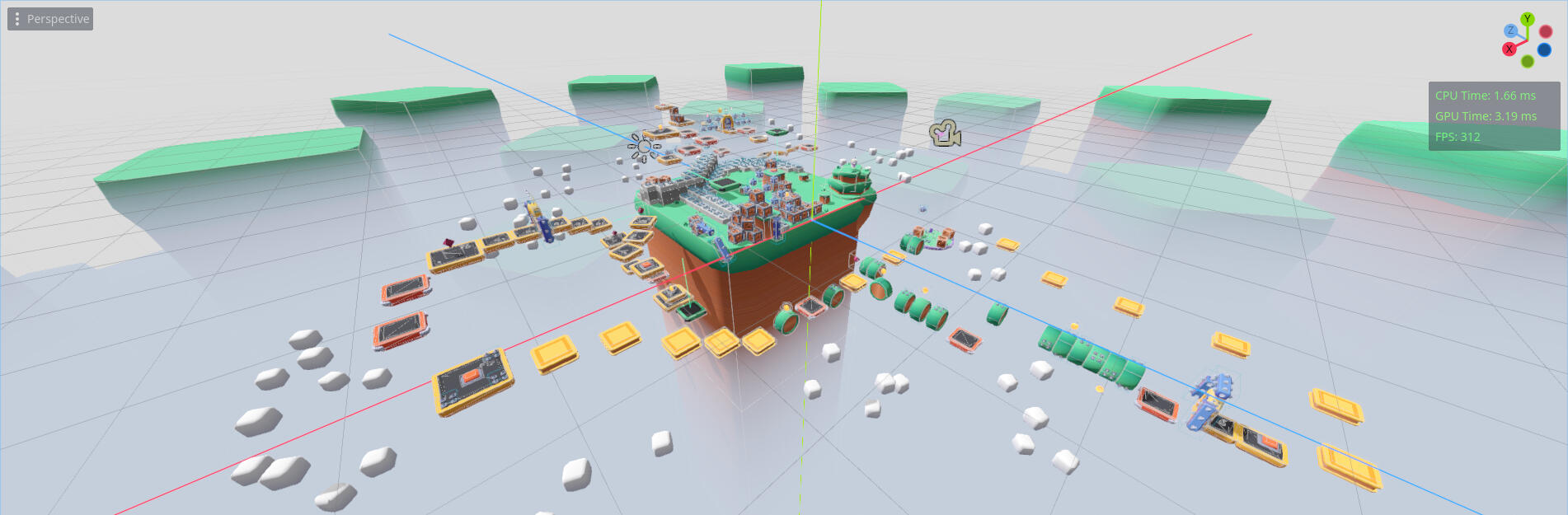
--------------------
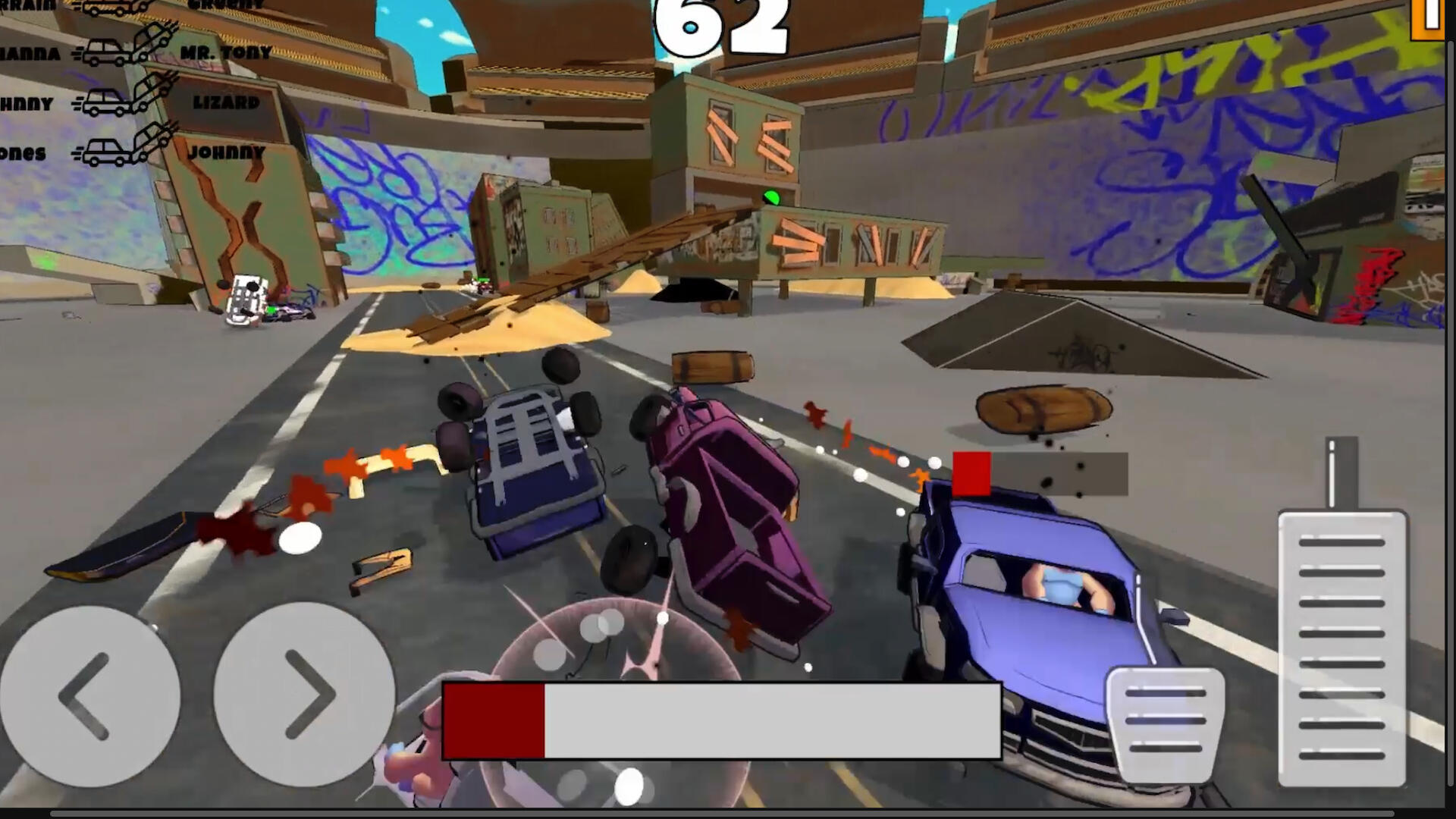
Vanhalla III: Enter the Monkey Dome
--------------------

--------------------
--------------------
| Team Size | Duration | Engine |
|---|---|---|
| 16 | 5 weeks | Unity |
--------------------
| Contribution |
|---|
| Lead Design, Audio Design |
--------------------
--------------------
Statue returning home
-------------------
| Team Size | Duration | Engine |
|---|---|---|
| 1p | 4 weeks | Unreal |
-------------------
This blockout was made during two courses spanning 4 weeks in total. The focus was on contrasting spaces and enviromental storytelling. An additional goal for me was to get more familiar with the translation of blockout elements into art assets.

Reach the shrine and discover clues of what happened.

LDD

Original topdown

Player start - the temple at the top of the mountain clearly visible as landmark

campsite with props, smoke from campfire is used as a reference to the narrative timeline

POI (Optional exploration)

Enviromental storytelling, clues regarding what has happened.

Cave entrance, new vantage of landmark, lift construction

light bounce is reinforced with rect light

transition vantage from cave entrance

stone blocks to guide player, stairs visible as well as temple wall as backdrop

connect back to landmark vantage

communicating to stand on the podium: empty podium reinforced by "broken pattern" and spatial UI.


--------------------
--------------------
hello!
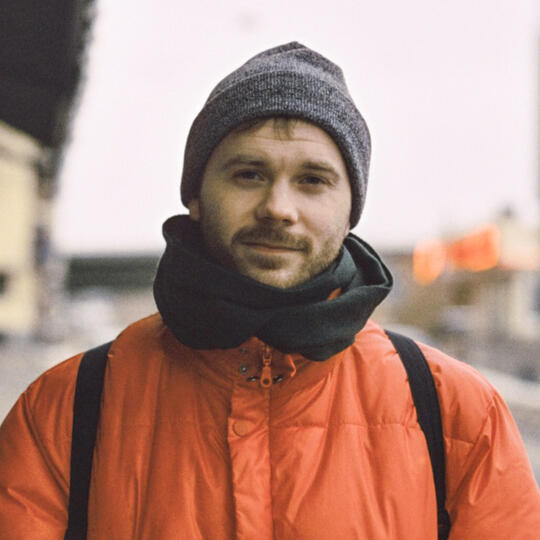
--------------------
| Team Size | Duration | Engine |
|---|---|---|
| 1p | 36 years |
Im a Level Designer situated in Stockholm, Sweden.
------------------
at a glance / quick facts
------------------
My party-trick is that I can say "gi-be-di-ga-be-di-go-be-di" really fast.
I have a dog called Noel.
I worked as a route setter in a climbing gym for 10 years.
I have worked in film, mainly as a director and cinematographer, for about 12 years.
I’m currently holding the world’s 26th 33rd best winstreak in Noita (stok_ed)
------------------
------------------
------------------
why games?
I have always enjoyed creating things and discover what they mean for someone else. I think games have this amazing ability to produce interesting responses and interactions that you need to discover and unravel and make sense of when you develop a game. I find this inherently super cool.
------------------
why level design?
I found myself really clicking with game design, and as that progressed I found that level design suited me well when working with others.
My background in cinematography and film editing has lent itself well to level design I think. There is something about chronology and spatial cues that seems familiar between the two.Also, besides the obviously huge differences the workflows in level design has a similar structure where you start with something crude, maybe even pretty bad and then you need the resilience to keep improving on it in iteration after iteration.
-------------------
I think I always played games both because I enjoy them as a source of entertainment but also because I've been fascinated by so many different aspects of games. Take grand theft auto, beyond being fun games I felt like Neo in the matrix trying to see through the simulation.Random memory:
Wolfenstein 3d in my fathers lap, both of us were so scared. I controlled SPACE which could open secret doors and my dad did the rest. In hindsight I know my dad is really bad at these games so maybe thats why it was so scary.
My intention was to illustrate the game mechanics enough as to allow our imagination to see the level in the original game.
CV / Edvard Stokstad (1989)

